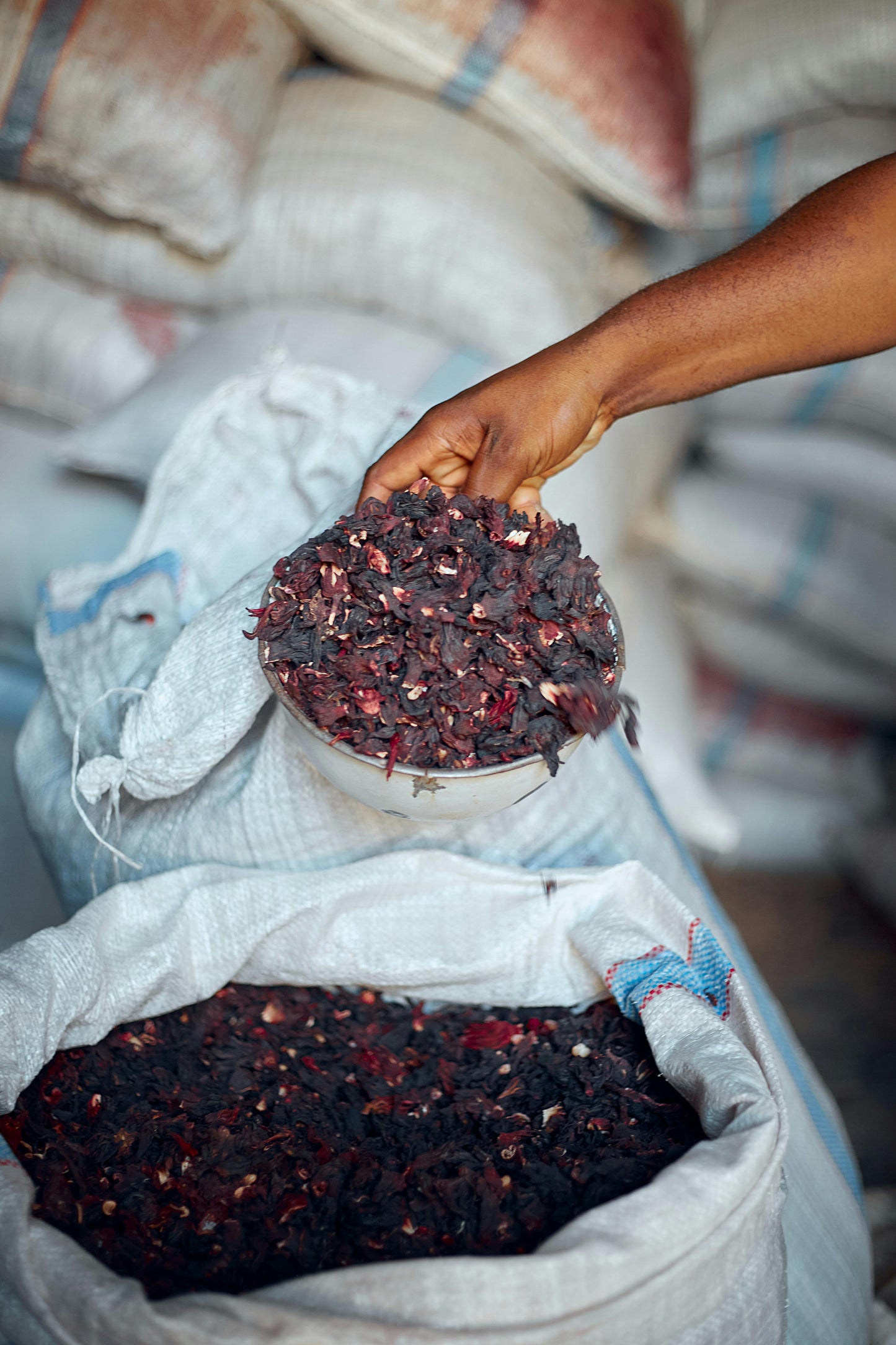
Dried Hibiscus Flowers (100g)
Dried Hibiscus Flowers (100g)
About This Herb
Hibiscus (Hibiscus sabdariffa) is one of the most celebrated herbs in traditional wellness, recognised by its deep crimson colour, bold tart flavour, and a rich history of use across African, Asian, and Middle Eastern healing traditions. From being brewed as a daily wellness tea to being used in skin and hair care, hibiscus has earned its place as a true whole-body herb.
Our dried hibiscus leaves are carefully sourced and preserved to retain their vibrant colour, natural acids, and full spectrum of plant compounds, ready to work for you from the very first sip.
Benefits of Hibiscus Leaf:
Heart & Blood Pressure Support
Hibiscus helps relax and widen blood vessels, which can reduce the risk of stroke and heart attack. Clinical studies have shown it to be one of the most researched herbs for cardiovascular wellness.
Weight Management
The flavonoid and enzyme content in hibiscus helps the body break down carbohydrates and prevent the accumulation of excess fat cells. It may also help curb hunger and reduce appetite, supporting weight management by regulating metabolic function, improving digestion, and reducing bloating.
Anti-Inflammatory
Several animal studies and small human studies have shown hibiscus’s ability to fight inflammation, which plays a role in the development of many illnesses, including heart disease, asthma, and arthritis.
Rich in Antioxidants
Hibiscus is rich in antioxidants that help the body combat free radicals, supporting skin elasticity, moisture, and overall cellular health.
Digestive Support
Some people find hibiscus helpful for bloating, indigestion, and constipation, due to the presence of natural fruit acids found in the plant.
Hair & Scalp Health
Among the many uses of hibiscus leaves, making hair oils, masks, and natural conditioners is one of the most common, adding shine and improving overall hair health.
Skin Healing & Wound Care
A poultice of hibiscus leaf has traditionally been used for treating external wounds, abscesses, boils, and sores, as well as to relieve headaches and inflammation.
Blood Sugar Balance
Hibiscus has shown anti-diabetic effects and may help lower blood sugar in healthy adults, with research suggesting it can inhibit the absorption of carbohydrates in the intestine.
Cold & Respiratory Relief
Hibiscus can bring relief from coughs and colds when consumed as a tea, and may act as a tonic for other respiratory issues such as sore throat.
Ways to Use Hibiscus Leaf:
1. Hibiscus Tea
Add 1–2 tsp of dried hibiscus leaves to 240 ml of boiling water. Steep for 5–10 minutes, then strain. It has a slightly sweet and sour taste, similar to cranberries or rosehips, and can be enjoyed hot or cold. Add honey to taste.
2. Iced Hibiscus Tea (Sun Tea)
Add 1–2 tablespoons of hibiscus to a litre of cold water and let it sit in the sun for 2–6 hours. Once infused to your liking, strain and serve with a sprig of mint.
3. Herbal Blend
Pair with ginger, lemon verbena, rosehip, or mint for a more complex wellness blend. Hibiscus adds beautiful colour and tartness to any herbal mix.
4. Tincture or Extract
Steep dried hibiscus in a neutral alcohol for several weeks, strain, and use a few drops in water or juice daily for a concentrated dose of plant goodness.
5. Eaten as Food
The young leaves can be eaten raw or cooked and are a favourite in many tropical cuisines. They are high in soluble fibre, helpful for supporting healthy intestinal flora and reducing excess cholesterol.
6. Topical Poultice / Hair Mask
Blend soaked or boiled leaves into a paste and apply directly to skin or scalp for soothing, nourishing benefits.
⚠️ Disclaimer
This product is not intended to diagnose, treat, cure, or prevent any disease. Consult a qualified healthcare professional before use, especially if you are pregnant, breastfeeding, or on chronic medication, particularly blood pressure or diabetes medication.
Share